GAI & the creative process (part 2)

Continuing on from my last post, let’s see if we can modify the prompt provided to my model to generate better content or provide additional ideas for exploring in the story.


Following the output from my first prompt, I added the following:

Expand on Roran’s motivation for entering into the woods. Make him much more cautious of meeting an elf, no matter how beautiful.

By building on the same chat session with the model, it ‘understands’ its prior output, allowing me to reference the character name it provided previously. It also knows to use that prior output as a starting point for this iteration. The revised output:

I trudged through the dense undergrowth of the exotic forest glen, my weary limbs protesting each step. The sun was beginning to set, casting long shadows over the jagged peaks and rocky crags that towered above me. My heart ached with longing for home, but the allure of the rare and valuable herbs that grew within this enchanted woodland kept me pressing onward. The forest was said to be cursed, filled with magical creatures and elusive beings, some friendly, others not so much. I had heard stories of humans being lured into its depths and never returning. But the promise of a lucrative sale at the market in the nearby human village drove me on.

As I ventured deeper into the forest, my senses were on high alert. Every sound, every rustle in the bushes was met with suspicion and fear. I had grown up hearing tales of the elves that inhabited these woods – tales of their magical powers and their hatred for humans. The elven race was rumored to guard their territory fiercely, and many a human adventurer had fallen victim to their enchantments or traps.

Despite my caution, I couldn’t deny the allure of the ethereal beauty that surrounded me. The sky above was painted in vibrant hues of orange, pink, and purple as the sun began its descent towards the horizon. The forest floor was bathed in a soft golden glow, the leaves shimmering like precious gems against the rich tapestry of greens and browns.

But then, my senses were jolted from their reverie by the sound of movement nearby. My hand instinctively reached for the hilt of my sword as fear gripped my heart. But as the figure emerged from the shadows, I found myself unable to summon the anger and hatred that had once fueled my prejudices.

Before me stood a beautiful elven woman, her skin an otherworldly shade of green, her eyes shimmering like sapphires. Her delicate features were adorned with intricately woven vines and petals, a testament to the magical bond she shared with the forest. The sight took my breath away, leaving me momentarily speechless.

But I knew that beauty alone was not enough to trust this creature. My mind raced with the stories I had heard, the tales of elven deception and human naivety. But as I looked into her eyes, I saw only kindness and curiosity. I could sense no malice or ill intent, only a genuine desire to connect with me.

And yet, I couldn’t ignore the gnawing fear that lurked in the back of my mind. The thought of defying centuries of hatred between our races weighed heavily on my shoulders. But as I looked into her eyes once more, I knew that if there was even a glimmer of hope for love and understanding between us, it was worth taking the risk.

“I am Eolande,” she introduced herself, extending a graceful hand towards me. “And you are?”

My throat went dry as I took her hand, feeling the gentle touch of her fingers on my skin. “I’m Roran,” I stammered, unsure of what to make of this moment. But as I looked into her eyes once more, I knew that I wanted to explore this connection further, despite the odds against us and the warnings of those who came before me. The forest held its breath, waiting to see if we would let our preconceptions and hatreds stand in the way of love or if we could find a new path forward, one of understanding and acceptance.

This is a little better, but still not what I would cut and paste into a story. I’d like to have more motivation for Roran. This is where the power of GAI can help us as writers. Rather than filling out a back-story and coming up with that motivation, I can ask the model!

Prompt: “Why is Roran driven to keep looking for the herbs?”

Roran was driven to keep looking for the rare and valuable herbs within the exotic forest glen for several reasons. Firstly, there was the promise of a lucrative sale at the market in the nearby human village. The herbs were said to be worth a fortune and could bring significant financial gain for Roran if he could successfully acquire them. This motivation fueled his determination to venture into the forest despite the risks and dangers that came with it.

Secondly, there was a deeper sense of adventure and curiosity that drove Roran onward. He had heard tales of the enchanted woods from travelers and elders in his village, stories of magical creatures and rare herbs that could not be found anywhere else. The allure of exploring this unknown land and discovering new wonders kept him pressing forward, even as fear and caution nagged at him.

Lastly, there was a sense of personal challenge and accomplishment that Roran sought in his quest for the herbs. He knew that finding these elusive plants would not be an easy task, but he was determined to overcome any obstacle that came his way. This drive to succeed and prove himself gave him the strength and determination to continue on despite the odds against him.

However, as Roran’s journey progressed and he encountered the beautiful elf Eolande, his motivations began to shift. He found himself drawn to her in a way that went beyond the allure of the herbs or the promise of financial gain. The connection they formed challenged his preconceptions and forced him to question the hatred and mistrust that had long existed between their races.

As Roran continued on his journey, he began to realize that there was more to life than just the pursuit of wealth and material possessions. He discovered that love, understanding, and acceptance were far greater treasures to be sought after. And so, with newfound determination and a desire to break down the barriers between their races, Roran pressed onward, his heart filled with hope for what could be.

Now we’re getting somewhere!

I have three motivations I can use to flesh out Roran’s character and back story. I have an internal conflicts that can create plot points, and I even have a possible overall theme for the story. Here is the value of GAI for writers; It can be used to quickly create ideas for stories to be built around.


Follow me on Amazon, GoodReads, or Facebook to get information about upcoming book releases.
Run one ad….a PSA

This is a Public Service Announcement for any authors who run ads on Facebook or Instagram. You should know that you will start getting phishing emails within two days of the ad starting.


Following the tips I got from an editor for self promotion of books, I have been cross posting these blog entries to Facebook. I decided to promote one posting letting readers know about a discounted price for the Kindle version of A New Past: Book One.

The ad was easy to set up and run, and I saw some traction from it in terms of purchases and pages read on KindleUnlimited.

Then the spam started coming in.

I’m savvy enough to not click on random links in emails, no matter how legitimate they look, but I didn’t even have to click on a link to know this was phishing.

Firstly, the email address the note was sent from was not a Meta related domain, even though the sender display name was “Meta Pro Team”. Huge red-flag. If you are not looking at the “from” address on emails, I encourage you to start. It’s the simplest way to spot something fishy.

The subject and body of the email indicated that my ads account on Meta was in violation of their user terms. This was the second flag. When I got the first email, it arrived right after I got a not (from Meta) that my account had just processed the payment for the prior day’s promotion. If there was a problem with my ad account, the ad should have stopped running.

I then copied the link in the button embedded in the email. It was for a strange looking domain. I looked up the domain on whois.com only to discover the domain hosting the web-form was available for purchase. Strange. If the site was legitimate, it should have a been owned by Meta.

I chose to ignore the first email. I ignored the second email as well. The third time it hit my inbox, I reported the phishing attempt to Meta using the admin dashboard links in my ad account.

While nothing bad happened to me, people who are not as cautious could be scammed into providing login credentials to nefarious people. Something as sensitive as an Ad account has banking or other payment links that can be easily exploited. Hopefully, this reminder will help prevent you from falling victim to scammers.


Follow me on Amazon, GoodReads, or Facebook to get information about upcoming book releases.

Using GAI to jumpstart your creative process

There are a lot of fear mongering articles about Generative AI subverting the role of creatives such as actors, screenwriters, and other authors. While the fear is real, I’m not convinced the threat is. Rather than taking the articles against GAI at face value, I wanted to explore what the current state of the art is. Here are my findings and observations.


I’m running LM Studio and the Meta Llama-Llama-2 model on my MacBook Pro. I prefer running local models for greater flexibility and data security, since nothing leaves my machine unless I choose to post it somewhere. Other online tools likely will provide similar results.

As a reminder, output from a GAI model starts with a prompt, which can be in the form of a question or directive as input to the model.

My prompt: “As a published author of fantasy-based romance stories, draft a scene introduction for an exotic forest glen with the first meeting of a human and elf destine to find love for one another, despite the cultural hatred between their two races. Write in the first-person, with the human being the viewpoint character.”

Here’s what the model produced:

I trudged through the dense undergrowth of the exotic forest glen, my weary limbs protesting each step. My heart ached with longing for home, but the allure of the rare and valuable herbs that grew within this enchanted woodland kept me pressing onward. The sun was beginning to set, casting dappled light through the canopy of leaves overhead, painting the forest floor in intricate patterns of shadow and sunlight.

Suddenly, I heard a rustling in the bushes nearby. My hand instinctively reached for the hilt of my sword as fear gripped my heart. But then, instead of the snarl of an enemy, I was met with the sweet melody of an elven voice.

“Greetings, traveler,” it called out, its tone soft and musical. “You are not from these woods, are you? I have not seen a human in these parts for many moons.”

I hesitated, my grip on my sword loosening as I took in the figure that emerged from the shadows. A beautiful elven woman stood before me, her skin an otherworldly shade of green, her eyes shimmering like sapphires. Her delicate features were adorned with intricately woven vines and petals, a testament to the magical bond she shared with the forest.

Despite the enchantment of her appearance, I was wary. The humans and elves had been at odds for centuries, their cultures clashing and their prejudices running deep. But as I looked into her eyes, I saw only kindness and curiosity. My heart raced as I realized that perhaps there could be more to this relationship than hatred and mistrust.

“I am Eolande,” she introduced herself, extending a graceful hand towards me. “And you are?”

My throat went dry as I took her hand, feeling the gentle touch of her fingers on my skin. “I’m Roran,” I stammered, unsure of what to make of this moment. But as I looked into her eyes once more, I knew that I wanted to explore this connection further, despite the odds against us. The forest held its breath, waiting to see if we would let our preconceptions and hatreds stand in the way of love.


Not bad, but it is not something I would cut a paste into a story. As a standalone start for a story, it does not do much to engage the reader’s senses, relying on the words from the prompt “exotic forest” and descriptions that are almost cliches in the fantasy genre. Why must elven maidens be beautiful and have green-cast skin? It also does not provide much background on why humans and elves have had culture clashes and animosity toward one another. I also don’t like the cliche of the man being “enchanted” by her beauty. I think a more interesting tale would be if they grew on one-another rather than him having “love at first sight” feelings.

However, it does give a good starting point for my own imagination and style to begin fleshing out into a story. I like the character names. I think the reason Roran is in the woods gives me some ideas on why he would venture into a potentially hostile situation. Maybe he strayed further in the woods for some reason….maybe he needs the herbs for a medicine for someone close to him, or they are an easy source of money to help him get something he needs. For Eolande, I want her to have more depth as well. Why is she in the forest? does she live close to where they meet or is she too looking for something? If there is a history of conflict between the races, why is she so open and willing to engage with him?

Given this simple example, I don’t think GAI will quickly replace writers unless readers settle for flat re-working of existing tropes. In my next post, I’ll explore adding to the prompt to see if some these concerns can be address. I do think it is a good tool for creatives to use for ideation.

Comment to share your perspectives on the good and the bad of GAI.


Follow me on Amazon, GoodReads, or Facebook to get information about upcoming book releases.

Writing a mind-worm

As authors, we all want readers to want to come back to our story to either re-read it, or to eagerly await the next tale in the series. Commercial science fiction and fantasy seem to have raised the bar for these types of engaging tales with truly epic arcs. I call them ‘mind-worm’ tales.

To date, all of my writing has first been shared in serial form in an online story forum. The tales converted to novels have now been published for Amazon and other platforms.

As I work on my next story, I’ve been pondering what would make it a ‘mind-worm’. I don’t want to revisit the characters or plot of “A New Past“, but do have some thoughts on adding a novel in the “Families of the Empire” universe. It’s unlikely to be a direct continuation of the characters in the first book, though I do have ideas for them to continue growing and developing. With that in mind, I have jotted down some things that make me want to go back and re-read a book or series so that I can incorporate these into my next book.


  1. Complex and well-developed characters: Creating intricate and multi-dimensional characters that readers can connect with and root for is essential. The more readers care about what happens to these characters, the more likely they are to revisit your stories or continue reading the series. I personally found Robert Jordan’s characters in the Wheel of Time series to be what kept drawing me back to the books.
  2. Thought-provoking themes and moral dilemmas: Exploring complex ideas and posing thought-provoking questions within your story can leave a lasting impression on readers. These themes can encourage readers to reflect on their own beliefs, values, and experiences, making them more likely to return or read the next installment in the series. Isaac Asimov’s Foundation trilogy is one example. Roger Zelazny’s Amber series is another. While both series have incredibly rich settings, it was the themes and dilemmas the characters faced that kept me coming back.
  3. Engaging plot twists and surprises: Keeping readers guessing with unexpected plot twists and surprises is a great way to keep them engaged and interested. These moments of suspense can leave a lasting impression and make readers eager to revisit the story or continue reading to see what happens next. Within individual stories, I enjoy plot twists, but I hate cliff-hangers. Here I think it is important that each story in a series has an engaging plot, but also delivers for the reader without that cliff-hanging end of the book. Piers Anthony is a master of this in his pun filled Xanth series. Each book can stand alone and deliver an engaging tale, but new readers to the series always wonder what the next book will deliver.
  4. Richly detailed settings and worldbuilding: Building a vivid and immersive world that readers can lose themselves in is an effective way to encourage re-reading and engagement with your series. The more intricately you develop your setting and its rules, the more invested readers will become in your story. I think of Larry Niven whenever I consider world building. Ringworld is truly epic and awe inspiring.
  5. Emotional depth and resonance: Creating a strong emotional connection between the reader and the story can make for an unforgettable reading experience. Whether it’s through exploring complex relationships or evoking powerful emotions, ensuring that your story leaves a lasting impact on readers is essential in making them want to revisit it or continue with the series. Anne McCaffrey managed to create a deep emotional response in me with her HarperHall and Dragon Riders series. I was an eager buyer of her tales once those first two trilogies had me hooked.

What is missing from this list? What do you think is important for you to revisit a story or seek out the next installment of a series? Follow me and comment with your thoughts.


Follow me on Amazon, GoodReads, or Facebook to get information about upcoming book releases.

Bringing it together: Why Erotic Sci-Fi

As I’ve reviewed several mainstream sci-fi stories and looked at the themes they share with erotica and erotic science fiction, it becomes apparent that all stories that tackle complex human interaction will touch on the erotic or open doorways into more explicit encounters and thoughts.  It seems to support the concept that the most erogenous organ is the human mind.  When I think about the themes that appear in erotica, science fiction, and erotic science fiction there are some common threads across all three genres:

1. Power Dynamics: Sexual encounters can be charged with power imbalances, whether they are based on gender, socio-economic status, or other factors. Mainstream fiction, science fiction, erotica and erotic science fiction all explore the intricacies of these power dynamics, often highlighting the complex emotions and desires that arise from such situations.  

2. Personal Growth and Identity: Sexual experiences can be transformative moments in our lives, helping us to understand ourselves better and grow as individuals. The stories that grab us, make us think, and entertain us offer opportunities to explore the ways sexual encounters shape personal identity and contribute to our emotional development.

3. Escapism and Fantasy: Good stories offer opportunities for escape and fantasy. Regardless of  genre, they allow us to explore taboo desires, alternative realities, and intriguing power dynamics – all while providing a thrilling and engaging reading experience that keeps us coming back for more.

Additionally, Erotic Science Fiction gives us opportunities to explore new dynamics 

4. Technology and Human Desire: In today’s world, technology plays an increasingly significant role in our lives, including how we express and explore our desires. Erotica and erotic science fiction offer opportunities to examine the ways technology impacts our sexual experiences and relationships. From virtual reality simulations to advanced sex toys, these genres allow us to imagine new possibilities for human desire and connection.

5. Intersection of Technology and Humanity: In an increasingly technological world, understanding the relationship between technology and humanity is crucial for navigating our future. Erotic science fiction, in particular, provides a unique lens through which to examine this intersection, as it explores the ways technology impacts human desires, relationships, and identity in futuristic contexts.

These themes of technology and human desire, power dynamics, personal growth, and identity resonate in both mainstream fiction, science fiction, erotica and erotic science fiction because they tap into fundamental aspects of the human experience. Stories in these more explicit genres offer unique opportunities to explore our sexuality, relationships, and the intersection between technology and humanity in intriguing ways, inspiring readers with thought-provoking narratives that challenge, entertain, and ultimately enrich our understanding of ourselves and the world around us.


I hope you’ve enjoyed this exploration of Science Fiction and discussions of how the erotic themes persist, even if it’s not labeled “Erotic Science Fiction”.


Follow me on Amazon, GoodReads, or Facebook to get information about upcoming book releases.

Neuromancer : Erotic Sci-Fi in the Mainstream

As I previously mentioned, Erotic Science Fiction (ESF) is viewed by many as “just” porn.  While some of it is or may be, much of it simply expands on themes that have been explored in mainstream science fiction as well.  I like to learn from the masters, so have undertaken a review of some of the great authors in science fiction and found many of the elements that categorize ESF today.  Cyberpunk is hardly considered to have erotic overtones, but looking at the themes within “Neuromancer” may challenge that assumption.


William Gibson’s groundbreaking novel, “Neuromancer,” published in 1984, is often credited as the seminal work that defined the cyberpunk subgenre of science fiction. This intriguing story of a washed-up computer hacker named Case, redeemed and resurrected by a powerful artificial intelligence known as Neuromancer, has not only left an indelible mark on science fiction but also subtly influenced the history of erotic science fiction.

At first glance, “Neuromancer” might not seem like an obvious foray into erotic themes. However, upon closer examination, the novel’s exploration of the intersection between technology and human desire offers intriguing insights into the evolution of erotic science fiction.

One of the most notable ways “Neuromancer” contributes to this subgenre lies in its portrayal of virtual reality as a space for exploring desires that may be repressed or suppressed within society. In the novel, virtual reality is depicted as an immersive environment where individuals can experience intense sensations and emotions, including sexual desire. This exploration of virtual desire sets the stage for future works that delve deeper into the erotic potential of technology.

Additionally, “Neuromancer” touches upon themes like power dynamics, consent, and identity, which are central to erotic science fiction. The novel’s depiction of cybernetic enhancements, including sexual enhancement technologies, challenges societal norms and raises questions about what it means to be human – and how our desires define us.

Moreover, the novel’s protagonist, Case, is a complex character whose journey involves grappling with his past mistakes and seeking redemption. This narrative arc offers an opportunity for exploring themes of personal growth through the lens of desire and sexuality. In particular, Case’s relationship with Armitage, the powerful artificial intelligence who recruits him, introduces elements of power dynamics and emotional complexity that can be interpreted as erotic in nature.

Furthermore, “Neuromancer” offers a richly textured vision of a dystopian future cityscape – a setting that has become synonymous with cyberpunk. This dark urban landscape provides an intriguing backdrop for exploring the intersection between technology and human desire. For instance, the novel’s depiction of the underground hacker subculture offers opportunities to delve into unconventional relationships and power dynamics.

Finally, “Neuromancer” paved the way for future works in science fiction that more explicitly explored erotic themes. Its influence can be seen in authors like Pat Cadigan, Bruce Sterling, and Rudy Rucker, who built upon Gibson’s vision of a high-tech world where desire and technology intersect to create intriguing narratives and thought-provoking commentaries on society and human nature.

William Gibson’s “Neuromancer” may not be an overtly erotic work of science fiction, but its exploration of the intersection between technology and human desire, power dynamics, and personal growth set the stage for future works that would more explicitly delve into these themes and expand the boundaries of erotic science fiction. By offering a unique vision of a dystopian cyberpunk future where technology and human desire intertwine to create intriguing narratives, Gibson’s novel continues to inspire and influence the genre today.


Follow me on Amazon, GoodReads, or Facebook to get information about upcoming book releases.

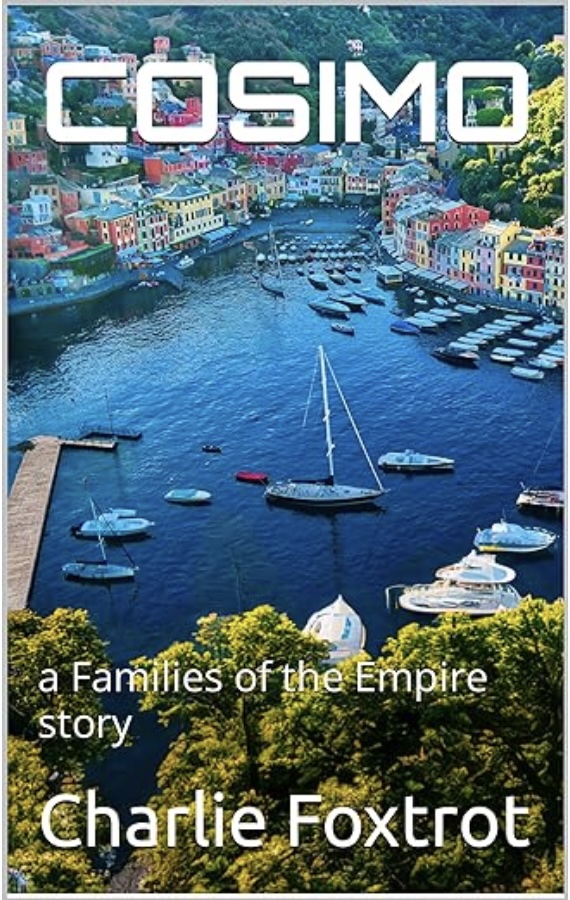
Cosimo : Available Now

My newest novel “Cosimo” is now available on Amazon Kindle and KindleUnlimited.


The story is set in the distant future after a small band of humans flee the solar system and strike out on a virgin world. Centuries after their landing, the descendants of the colony ship’s original crew rule over an empire with the power to dominate the whole world.

Part of their unique political structure and culture hits many of the themes and conflicts I’ve mapped out in my exploration of erotic science fiction. The main character, Cosimo Onwane is continually faced with different power dynamics as he negotiates his placement in society and his own family. He is forced to grow and adapt while making his way in a broader world. Hopefully, the world building and narrative give readers the right balance of escapism and fantasy to be entertaining while these other themes are explored.

The story also provides many of the conflict types common to erotic science fiction. Cosimo faces political intrigue within not just the empire, but within his own family as well. He confronts forbidden love and has to grow from that experience. He faces ethical dilemmas and dangerous situations.


If my description of the story hasn’t caught your attention sufficiently for you to check it out, take a look at the image gallery compiled as I worked for my own inspiration. If you are interested in how I made these pictures, check out my earlier posts on stable-diffusion and GAI image generation.


Follow me on Amazon, GoodReads, or Facebook to get information about upcoming book releases.

“Xenogenesis” or “Lilith’s Brood” series : Erotic Sci-Fi in the Mainstream

As I previously mentioned, Erotic Science Fiction (ESF) is viewed by many a “just” porn.  While some of it is or may be, much of it simply expands on themes that have been explored in mainstream science fiction as well.  I like to learn from the masters, so have undertaken a review of some of the great authors in science fiction and found many of the elements that categorize ESF today.  This is the third article on this theme and examines Octavia Butler’s Xenogenesis or “Lilith’s Brood” series that started in 1987 (twenty-two years after “Dune” and twenty-six after “Stranger in a Strange Land”), but touches on themes and thoughts that are still relevant today.


Consisting of three novels – “Dawn,” “Adulthood Rites,” and “Imago” – this intriguing body of work not only pushes the boundaries of science fiction but also subtly explores themes of sexuality, power dynamics, and identity. While eroticism might not be the first thing that comes to mind when considering Butler’s works, a deeper examination reveals how “Xenogenesis” could indeed be considered an essential contribution to erotic science fiction.

At its core, “Xenogenesis” tells the story of Lilith Iyapo, a human survivor of Earth’s destruction who is rescued by an alien race called the Oankali. These beings, who possess advanced technological and genetic abilities, offer humanity a chance at survival through a process known as “grafting,” which involves selectively merging human DNA with their own. In exchange for saving humanity, the Oankali demand that Lilith and her companions become sexually bonded to them – an arrangement that raises profound ethical questions about consent, power dynamics, and the very nature of human connection.

The erotic themes in “Xenogenesis” are subtle yet pervasive, woven into the narrative’s fabric as a means of exploring the complexities of desire, consent, and identity. For instance, the Oankali’s proposal to Lilith involves a degree of choice, but it is not an entirely consensual situation since humans are in dire need of salvation. This arrangement forces readers to grapple with questions about the nature of consent when one party holds significant power and influence over another.

Furthermore, the series explores alternative sexual relationships beyond traditional monogamy or heteronormative structures. In “Adulthood Rites,” we encounter humans who have formed intimate bonds with multiple Oankali partners, each providing unique genetic contributions to their human companions’ offspring – a concept that challenges societal norms and offers new possibilities for exploring human connection through the lens of science fiction.

Additionally, the series addresses the role of power dynamics in sexual relationships. In “Imago,” we follow the character of Akin, who grapples with feelings of inferiority and insecurity due to his status as a lesser Oankali. This internal struggle affects his romantic relationship with Iaso, a human woman he is bonded to, highlighting how power imbalances can impact sexual encounters and the broader relationship between partners.

Lastly, “Xenogenesis” offers an intriguing commentary on the transformative power of desire, particularly in the context of interspecies relationships. The bonds formed between humans and Oankali transcend mere physical attraction – they become deeply emotional connections that shape both individuals’ lives, offering a thought-provoking exploration of what it means to truly connect with another being, regardless of species differences.

Octavia Butler’s “Xenogenesis” series might not immediately come to mind when thinking about erotic science fiction, but upon closer inspection, these novels offer a unique perspective on power dynamics, consent, identity, and the transformative potential of desire in a post-apocalyptic world. By challenging societal norms through its exploration of alternative sexual relationships and thoughtfully examining the intersection between power, consent, and human connection, “Xenogenesis” stands as an essential contribution to the subgenre of erotic science fiction.


Follow me on Amazon, GoodReads, or Facebook to get information about upcoming book releases.

Dune: Erotic Sci-Fi in the Mainstream

As I previously mentioned, Erotic Science Fiction (ESF) is viewed by many a “just” porn.  While some of it is or may be, much of it simply expands on themes that have been explored in mainstream science fiction as well.  I like to learn from the masters, so have undertaken a review of some of the great authors in science fiction and found many of the elements that categorize ESF today.   “Dune” by Frank Herbert is in the public eye again as its latest adaptation hits the big screen.  Everyone will go to see the action and the epic cinematography, but few will realize the ESF elements it supports and inspires.


When it comes to science fiction, few novels have had as profound an impact on the genre as Frank Herbert’s groundbreaking masterpiece “Dune.” Published in 1965, this intricate tale of political intrigue, advanced technology, and a richly imagined desert world has influenced countless writers and readers – and even dabbled in erotic themes.

At its core, “Dune” is an epic exploration of power dynamics within the context of a feudal interstellar society. The novel’s intricate political landscape, populated by complex characters like Duke Leto Atreides, Paul Atreides, and Lady Jessica, sets the stage for a thrilling narrative that tackles themes such as control, manipulation, and survival.

But what makes “Dune” particularly noteworthy in the realm of erotic science fiction? One possible explanation lies in its subtle exploration of the human condition – and the ways desire and sexuality intersect with power struggles and societal norms.

Consider, for instance, the role of the Bene Gesserit sisterhood, a secretive order of powerful women who have mastered various mental and physical abilities through their rigorous training. Among these skills is the ability to manipulate others’ emotions – including those related to love and desire. The sisterhood’s use of this power to further their political agenda adds a layer of intrigue and complexity to the novel, making it ripe for exploration in erotic science fiction.

Moreover, “Dune” tackles the theme of taboo love, most notably between Paul Atreides and Chani – a Fremen woman with whom he falls deeply in love. Their passionate relationship defies societal norms and adds an element of danger and excitement to the narrative. The novel’s portrayal of this intense romance against the backdrop of political intrigue and desert survival underscores how desire can fuel both personal growth and larger conflicts.

The novel’s exploration of power dynamics extends beyond the realm of love and relationships to encompass the broader context of societal structures. The relationship between Paul and the ruling houses of the universe, particularly House Harkonnen and House Corrino, highlights how sexuality can be used as a tool for control and manipulation. This theme is exemplified through the character of Jessica, who uses her Bene Gesserit abilities to secure the loyalty of those around her – including her son Paul – ensuring their survival in a treacherous political landscape.

Another way “Dune” influences erotic science fiction lies in its world-building. The novel’s intricate details and richly imagined desert world, Arrakis, provide fertile ground for exploring the intersection between sexuality and the fantastical elements of science fiction. For instance, the Fremen people and their unique customs offer opportunities to delve into the complexities of erotic desire within a foreign cultural context.

Furthermore, “Dune” paves the way for subsequent works in the genre by demonstrating how erotic themes can enhance the science fiction narrative, adding depth and complexity without overwhelming the storyline. In doing so, Herbert’s masterpiece lays the groundwork for future writers to explore the intricacies of desire, power dynamics, and societal norms within the context of imaginative worlds and thought-provoking ideas.

In conclusion, Frank Herbert’s “Dune” is an essential work of science fiction that has left a lasting impact on the genre – including its influence on erotic science fiction. By tackling themes of power dynamics, taboo love, and world-building, “Dune” demonstrates how desire can fuel both personal growth and larger conflicts within the context of fantastical worlds and intricate narratives. As such, this groundbreaking novel continues to inspire new generations of writers and readers seeking to explore the complexities of human nature and the universe.


Follow me on Amazon, GoodReads, or Facebook to get information about upcoming book releases.

Stranger in a Strange Land : Erotic Sci-Fi in the Mainstream

As I previously mentioned, Erotic Science Fiction (ESF) is viewed by many a “just” porn.  While some of it is or may be, much of it simply expands on themes that have been explored in mainstream science fiction as well.  I like to learn from the masters, so have undertaken a review of some of the great authors in science fiction and found many of the elements that categorize ESF today.  I’d like to share my review’s with you all.  Let’s start with “Stranger in a Strange Land” by Robert A. Heinlein.


In the vast expanse of science fiction literature, Robert A. Heinlein’s groundbreaking novel “Stranger in a Strange Land” stands out as one of the most influential and enduring works that epitomizes mainstream erotic science fiction. First published in 1961, this novel has continued to captivate readers with its unique blend of sexual exploration, social commentary, and imaginative world-building.

At its core, “Stranger in a Strange Land” revolves around the tale of Michael Valentine, an orphaned human raised on Mars who is brought back to Earth as an adult. Although initially disoriented by human society, Michael soon becomes a charismatic leader and an advocate for sexual freedom. His unconventional ideas challenge the status quo, leading him to explore various facets of human relationships and desires.

One reason why “Stranger in a Strange Land” remains a seminal work in erotic science fiction is its portrayal of an alternate perspective on human sexuality. Through Michael’s experiences with Earth’s inhabitants, Heinlein invites readers to contemplate the societal norms and taboos surrounding sex. In doing so, the novel challenges conventional views on monogamy, promiscuity, and the role of group dynamics in fulfilling emotional and sexual needs.

Heinlein’s exploration of alternative sexual expressions extends beyond social commentary to include a more imaginative, science fiction element: the concept of “water-brotherhood.” In this novel, Michael introduces Earthlings to the Martian practice of water-sharing, which involves the exchange of psychological and emotional support through physical contact in a communal pool. This scene not only showcases the transformative power of human connection but also adds an element of fantasy to the story, making it a staple of erotic science fiction.

Another facet that sets “Stranger in a Strange Land” apart is its nuanced exploration of gender roles and relationships. In this novel, Heinlein challenges traditional ideas about masculinity and femininity by presenting characters who defy societal expectations. For example, the character Jubal Harshaw embodies both nurturing and dominant qualities, while Valentine’s sister, Patty, is strong-willed and independent – characteristics that are often reversed in conventional gender roles.

Moreover, Heinlein uses “Stranger in a Strange Land” to examine societal structures and the human condition through the lens of sexual exploration. The novel touches upon themes such as power dynamics, communication, and emotional intelligence – all wrapped up in an engaging narrative that continues to resonate with readers today.

As a result, “Stranger in a Strange Land” has left a lasting impact on mainstream erotic science fiction. Its groundbreaking ideas about human sexuality and relationships have influenced countless works within the genre and continue to inspire thought-provoking discussions among fans and scholars alike. By combining captivating storytelling with insightful social commentary, “Stranger in a Strange Land” remains a landmark work that epitomizes the best of erotic science fiction.

In conclusion, Robert A. Heinlein’s classic novel “Stranger in a Strange Land” represents a pivotal moment in the development of erotic science fiction. With its imaginative world-building, thoughtful exploration of human sexuality and relationships, and timeless themes, this work continues to captivate readers and inspire writers long after its publication. Its enduring influence on the genre is a testament to Heinlein’s visionary storytelling and the power of science fiction to challenge our perceptions and broaden our horizons.


Follow me on Amazon, GoodReads, or Facebook to get information about upcoming book releases.