Discussing Excerpt Two | Marketing Mondays

One of the problems with writing Erotic Science Fiction is the fact that many potential readers assume the focus is on the erotic elements rather than the underlying science fiction and general plot. To try and overcome this perception, I’ve started posting excerpts from my books that highlight some of non-erotic elements to show characters and conflicts that hopefully appeal to the more mainstream readers. These excerpts will be shared on Mondays and I’ve created a tag “MarketingMondays” to track the postings.

As the excerpts run, I’ll watch sales numbers and see if they are helping.


My second excerpt was the opening scene from Book Two. This scene sets ups some of the conflicts that will occur between Paul’s efforts and the military industrial complex in the second book. These conflicts will grow into geopolitical intrigue in the third book.

I selected this scene because it follows the climactic scenes in Book One which resolve the first conflicts Paul has with the US government stemming from his creation of a viable stealth component. While we may think stealth technology is mature or well known about now, that was not the case in July of 1985, which is the time the chapter is set in.

Additionally, this scene allows me to quickly set the stage that time has passed from the ending of the first book, without explicitly stating this is two years later in Paul’s life. I did not want to start the book with anything resembling a wordy re-cap with no action. Instead, I chose to set Paul in his office, which he did not have at the end of book one, and jump straight into the set-up for the conflict with Lockheed and the military. The second scene in the chapter also adds additional details to cover what has happened since the conclusion of the first book.

For anyone who has not yet read the books, there are likely a few obvious questions I can answer. If you have additional question I can answer, please leave a comment on this or the excerpt posting.

  • Is the stealth compound in the book real? I don’t know. I do know there were papers written the state a carbon nano-tube of the dimensions mentioned would attenuate radar reflections if they were uniformly distributed perpendicular to the surface. I don’t know that such a technique is used in the actual creation or construction of radar absorbing materials in use today.
  • Why wouldn’t the Air Force contract with Paul directly? Part of the plot of the first book deals with this. It is likely they would want to, but Paul went to Lockheed first, and entered into a contract with them. Whether it was smart for them to make an exclusive agreement with each other or not is a valid question, but you’ll have to read the books to see how it plays out.
  • Is the history behind the B-1 production shift real? Yes. I researched that point well. The Air Force had recently learned of the projected capabilities of the MIG-31 and the fact the B-1 as designed would be vulnerable. They also already had stealth experience with the F-117 showing what was possible in the B-2. However, Ronald Regan was able to campaign on re-starting B-1 production to bolster his position and paint his opponent as not “defending democracy” by making this a political issue. By changing the dynamics of this history, I position Paul to begin interacting more directly with the broader aerospace and military industries.
  • What else happens in Book Two? You’ll have to read to find out, but Book Two is currently the highest rated of the three on Amazon.


Follow me on Amazon, GoodReads, or Facebook to get information about upcoming book releases.

Military Technology and Intrigue: A New Past Excerpt


One of the problems with writing Erotic Science Fiction is the fact that many potential readers assume the focus is on the erotic elements rather than the underlying science fiction and general plot. To try and overcome this perception, I’m sharing some excerpts from my series, A New Past to share some of the “non-erotic” elements. This excerpt is the opening scene from Book Two and sets the stage for several conflicts that span the middle book in the series and set up plot points for the final book.


“Victor, I just told you that I don’t want to scale up manufacturing to that sort of volume.  To do it, I’d have to move production to a bigger site, and that would increase our security risk.”

Victor Martin was still my primary contact at Lockheed.  We had been discussing production forecasts all morning long.  He did not seem to want to listen to my arguments and would not tell me why he suddenly needed five times the volume of my carbon nano-tube stealth coating.

He looked as frustrated as I felt.  He loosened his tie, and then pulled out a sheet of paper.

“Sign this, and I can explain,” he said.

I read over the paper.  It was a typical in-brief document stating that I was a party to a Top Secret project titled “Long Dart,” and that I understood the restrictions regarding this project.  I hesitated, then signed and dated the page.

“Okay, now tell me what this is about.”

Victor gave me a tight smile.

“How familiar are you with the B-1 bomber?” he asked.

I shrugged and said, “I’ve seen pictures of it.  It’s an impressive looking plane.  Why?”

“It was a political hot potato in the 1980 election.  We knew it was vulnerable to Soviet technology based on the Belenko defection in 1976.  That’s when we first learned about the MIG-31, and its projected capabilities. Carter canceled the program.  Reagan brought it back in ’83, even though he knew we had a stealth bomber on the drawing board.  That design is based on a totally different airframe type.”

I nodded.  From my own past, I knew the flying-wing concept the B-2 would use to minimize its radar cross section.  I assumed they wanted to use my coating to improve the stealth characteristics even more.

“It must be a big mother, if you need me to scale up production to the levels we’re talking about,” I said.

Victor grimaced and said, “That’s just it.  We’re thinking that we can apply your coating to the B-1 and have an aircraft that runs at about a quarter of the cost of the new bomber, with just as much stealth.  Because of our work on the F-117, we got the contract to do this study.  We need to be able to cover about a thousand square meters of surface.  We also want to coat the first stages of the engine’s compressor blades.  You’ve been producing about a hundred kilos a month for us, since you came to California two years ago.  If our tests work as we expect them to, we’re going to want to apply the coating to all 100 of the B-1s that have been ordered, starting as soon as possible.  At your current production rates, you would need fifty months to produce enough coating.  If we add in the coating for the new bomber, the Air Force is going to need even more from you.  You have to increase production!”

I scrubbed my hands over my face.  “Damn it.  Does this mean Lockheed is going to release me from our contract?”

“What?” he asked, surprised.

“You have rights to purchase 100% of our production.  Are you building the new bomber?  If not, how would they get my coating?”

Victor paled as he said, “We’re going to have to talk about that.  We’re not one of the contractors on that project, though we’ve been brought in to review some of the work during the latest design reviews.”

“So, you want to modify a B-1, and have it show up the new bomber?” I asked with a smile.  “It makes sense if the B-1’s are cheaper to build as well.  We’re still talking about three-and-a-half million per plane just for the coating.  How are you planning to apply it?”

“We’re thinking of a whole surface replacement.  We’ll pull the airframe panels, coat them –along with the screw heads– and then put them back on the aircraft.  It will be a pain to do the refit, but we don’t see any other way.  The engines we’ll just change out.  We’re working with GE to apply the coating to the rest of them during production.”

I shook my head.  “Crap.”  I thought about the production set up in Austin.  “Okay, I can set up parallel production lines, but am going to have to buy or build a bigger space.  How much lead time do I have?”

“Current production, and the stockpile of the coating we’ve built up, should let us handle the test contract, which is just two coated aircraft.  However, we’re pretty sure the Air Force is going to want to move forward quickly, once they see the data.  Maybe ten months.  We have a demonstration milestone in six and have already started applying the coating on one aircraft.”

“You know, using the coating is going to come out if you guys do this, don’t you?”

“Why do you say that?  We’ve got good operational security.”

“B-1s are already on folks’ radar.  They know the airplanes are not fully stealthy.  Once you start coating them, someone will notice they are much stealthier.  If you do this, it’s just a matter of time ’till they figure it out.”


Book Two has more action/adventure content than book one. I hope this excerpt whets your appetite. A New Past is available on Amazon, as well as Smashwords and other ebook channels.


Follow me on AmazonGoodReads, or Facebook to get information about upcoming book releases.

Writing Exercise 5: Conflict Sketches

This is part of my writing exercises workbook, available to subscribers.


Conflict drives the story forward by challenging characters, testing their values, and pushing them to make difficult decisions. Without conflict, stories can feel flat or predictable. By skillfully weaving conflict into a narrative, authors can keep readers on the edge of their seats, eagerly turning pages to discover how the characters will navigate their struggles. Conflict also helps develop characters, revealing their strengths, weaknesses, and motivations as they grapple with challenging situations. Ultimately, well-crafted conflict contributes significantly to a story’s overall impact and memorability.  

There are three main types of conflict in a story: external, internal, and situational. External conflicts involve characters’ struggles against other people or forces outside their control (e.g., war, natural disasters). Internal conflicts occur within the character themselves as they grapple with personal issues such as self-doubt, fear, or moral dilemmas. Situational conflicts arise from the circumstances surrounding the characters and can be related to location, time-period, socioeconomic status, etc.

In this exercise, pick a conflict type, identify who or what is opposing your character, and sketch out a narrative to set the stage for the conflict.  The sketch a narrative highlighting the climax or resolution to the conflict.


Let’s look at an example where a character is facing an external conflict by being stranded after a shipwreck:

The sun sank lower in the sky, casting long shadows across the sandy beach. Jane stood alone, her heart pounding against her ribs as she surveyed the vast expanse of water that lay between her and safety. Her ship had been wrecked during a violent storm, leaving her stranded on this desolate shore with nothing but the clothes on her back and a battered lifeboat at her disposal. The sky darkened further, casting an ominous hue over the waves that crashed relentlessly against the rocky shoreline. She knew she had to act quickly if she was going to survive this ordeal.

Without filling in all the struggles Jan faces, let’s jump to the climax of her struggle.

As the night wore on, Jane battled against exhaustion and despair. Her muscles burned as she pushed the lifeboat further up the beach, its weight seemingly growing heavier with each step. The waves crashed harder now, threatening to engulf her in their icy embrace. With a last burst of strength, she managed to drag the boat high enough above the tide line that it would be safe from the incoming storm. Collapsing onto the sandy ground, Jane stared out at the darkness that shrouded the sea, knowing that survival was far from guaranteed but resolved to fight for her life, nonetheless.

Finally, let’s look at a resolution to this conflict.

The storm raged on for days, battering the island mercilessly and leaving little hope of rescue. But against all odds, Jane managed to survive by rationing her food supplies and enduring the harsh elements. As the skies cleared and the sun once again appeared over the horizon, she felt a renewed sense of determination to find a way off this desolate island. With what remained of the lifeboat’s materials, she constructed a makeshift raft that could carry her across the treacherous waters. Finally, after days of perseverance and courage in the face of adversity, Jane set sail towards the distant horizon, her heart filled with hope for a new beginning.

This example is purely throw-away work, but it does help reinforce the need for conflict to progress and drive the story forward.  In this example, it could easily draw on internal conflict based on Jane’s self-doubt of her ability to do the things her situation demands of her.  It could have iterations of trying, failing, and trying again until she succeeds in saving herself.  It could become a single chapter illustrating her character traits and setting up a longer conflict within the story.  The key is finding a situation, actions, and results that will drive the story forward.


Remember, these exercises are not supposed to be the opening to the next Great American Novel, they are about practicing the craft of writing and helping breakthrough any blocks you may be feeling.

As you perform this exercise, change the focus of the conflict from external to internal to situational. Consider starting with the resolution and then work backwards to get to the situation. Play with your narrative to stretch yourself and expand your writing.

Good luck, and have fun writing.


Follow me on AmazonGoodReads, or Facebook to get information about upcoming book releases.
Exploring Non-Erotic Elements | Marketing Mondays

One of the problems with writing Erotic Science Fiction is the fact that many potential readers assume the focus is on the erotic elements rather than the underlying science fiction and general plot. To try and overcome this perception, I’ve started posting excerpts from my books that highlight some of non-erotic elements to show characters and conflicts that hopefully appeal to the more mainstream readers. These excerpts will be shared on Mondays and I’ve created a tag “MarketingMondays” to track the postings.

As the excerpts run, I’ll watch sales numbers and see if they are helping.


My first excerpt was shared earlier this week. While the scene is from relatively late in the book (chapter 14), I felt it was a good excerpt since is encapsulates Paul and Jeryl’s accomplishments in the first part of the book while setting the stage for the climatic conflicts that make of the last part of the first book.

For anyone who has not yet read the books, there are likely a few obvious questions I can answer. If you have additional question I can answer, please leave a comment on this or the excerpt posting.

  • Who are Paul & Jeryl? Paul is the main character, a physicist cast back in time from the future into his fourteen-year-old body, but retaining his knowledge and worldview. Jeryl is his high-school “crush” who he decides to try and win over as her journeys through his life a second time.
  • Why did he decide to make a car and create other inventions? A lot of his motivation is laid out in the first excerpt. The key, is he wants to improve the world, not just for himself, but for everyone. This is a key motivation for him throughout the series.
  • Why not skip the erotic elements in the books? I’ve written about my personal perspective on erotic science fiction, but it’s worth re-stating here:

Human nature is intriguing, and the allure of the “forbidden” has long fascinated us. Sex is a fundamental aspect of being human—a natural activity that connects us all. Pretending that our characters do not experience physical desires or emotions felt dishonest and unsatisfying from a storytelling perspective. Moreover, I believe that exploring these themes in my writing provides depth and complexity to my characters, making them more relatable and engaging for readers.


Follow me on AmazonGoodReads, or Facebook to get information about upcoming book releases.

A New Past: Paul Taylor’s Groundbreaking Innovations and Vision for the Future


One of the problems with writing Erotic Science Fiction is the fact that many potential readers assume the focus is on the erotic elements rather than the underlying science fiction and general plot. To try and overcome this perception, I’m sharing some excerpts from my series, A New Past to share some of the “non-erotic” elements. This first scene is from Book One, Chapter 14. It deals with Paul’s public debut on the national stage which goes on the create some problems for him and Jeryl in the future.


Jeryl squeezed my hand as the show cut too commercial.  We were at Jim’s house in Bloomington.  Jyl and her parents were there along with Mom, Jim and Kelly.  Jim and Lisa had also joined us for the Sunday evening airing of “60 minutes”.  They had finished filming it almost six weeks ago.  The buzz in town was just starting to die down.  I knew it would reach a different level of drama this week.

The ticking of the stopwatch brought my attention back to the TV.

Dan Rather’s voice greeted us.  “Some people claim that America’s youth are not being prepared by our education system to be ready to lead our country into the future.  With continued criticism of the Department of Education and the quality of education in America, we decided to look at an example in rural America that would challenge those critics.  Here is Morley Safer with an interesting glimpse into our next generation.”

The scene cut to a sweeping panorama of our fields covered with snow before pulling back to show my shop in the foreground.  Morley began his voice over.  “The heartland of America, where Friday night football matters as much as the price of corn or soybeans; where families have struggled to make a better life for their children for generations; where new ideas are being born as easily as crops rising in the spring.  This is a new generation of innovation, and it’s coming from a garage on a humble farm that most of us would drive past without giving a second look.”

The camera cut to my office.

“This is the office of a modest inventor.  He has been at it for two and one-half years and has filed or been granted forty-two patents as of this filming.  He is seventeen years old.  His name is Paul Taylor, and he wants nothing less than to change the world.”

I groaned and Jeryl and Mom both shushed me.

Morley went on with background on my car and then included some of my footage from the first car show we did.  Then it cut to the interview footage.

“And that show led to a deal with Chrysler, Ford, and General Motors?”  Morley asked.

“That’s right.  We now have agreements with most auto manufacturers in the U.S., Europe and Japan.”

“And you did this just after you turned sixteen years old?”

I smiled at the camera.  “My stepsister actually had to take the car to get its certificate of road worthiness, since it was ready a week before my birthday.”

The camera tightened on me.

“Why?  Why put so much effort into this idea of a better, safer car?”

“In 1979, in the U.S. alone, over fifty-one thousand people died in auto accidents.  Isn’t that reason enough?  I had ideas to apply the new microprocessors being built by Motorola and Intel to make cars safer.  If I could prevent even a portion of those fifty-one thousand deaths, didn’t I have an obligation to?  I know how my mother would answer that question.”

“But many of your inventions are not just about safety items.  Your car gets pretty impressive gas mileage as well.”

“It does.  I thought Americans would appreciate that as well.  The price of gas doubled on average between 1979 and 1980.  It’s only going higher.”

“Why?”

“Globally, our appetite for energy doubles every seven years.  If demand for internal combustion engines keeps pace with that, we’ll see four dollar a gallon gas before the end of the century.”

“And you want to do something about that?”

“I do.  I want to give people a way to make their gallon, or dollar, go further and preferably reduce our dependence on oil for our energy needs.”

“Why single out oil?”

“Because there are better things for it to be used for and it’s a finite resource.  As far as I know, God isn’t pumping any more into the earth for us to go out and discover.”

The interview continued, switching between topics and scenes as Morley built a story about my accomplishments as well as why I thought they were important.

“I understand that you attribute your accomplishments to ‘hard work and thinking logically’.  Would that be your message to your peers watching this?”

I grinned at the camera.  “No, that sounds too dispassionate.  It’s true, but hardly motivating.”

“What would you tell them?”

“Think for yourself. Take logical risks.  Learn from your mistakes and setbacks, and don’t be afraid of failing.”

The interview ended with my words sub-titled on the screen and a still shot of me looking into the camera. Morley’s voice-over stated:  “Since filming this interview, PT Innovations has launched a new partnership with Nike selling the Diamond Skin brand of sportswear Paul Taylor and his girlfriend Jeryl Salaway created last fall.  Initial estimates are that it will be worth even more than his automotive patents.”

The ticking stopwatch announced the cut to commercial and I heard a collective release of breath by those around me.  Suddenly my back was being pummeled by congratulatory slaps and Jeryl was hugging me. Even Janet was smiling, I noticed.


I hope you enjoyed this excerpt. Read more to see how Paul created his fabulous car and more by checking out Book One of A New Past available on Amazon for Kindle.

Book One is also available via Smashwords and other channels for 33% off until August 28th.


Follow me on AmazonGoodReads, or Facebook to get information about upcoming book releases.

Writing Exercise 4: Bringing Objects to Life

This is part of my writing exercises workbook, available to subscribers.

This exercise is intended to focus on the details that bring important objects within a story to life and make the reader care.  Making it come alive to the reader is important because it forces writers to focus on their observational skills and use vivid language that engages readers’ senses. By taking an ordinary item and breathing life into its description, we can improve our ability to create rich, immersive settings and bring characters and storylines to life. Additionally, this exercise encourages creativity and imagination by challenging us to think outside the box and see even the most mundane objects in a new light. Ultimately, making mundane objects come alive through writing helps us develop our craft and connect more deeply with readers.


To start, look for something near at hand, like a pencil, your computer, your favorite coffee mug; anything nearby. Now come up with five different adjectives to use while describing it. Then take these inputs and craft a single paragraph narrative that you could drop into your story, if the object was important to your characters or the plot overall.

Here are some objects and adjectives to spur your imagination, but feel free to come up with your own as well.

ObjectsAdjectives
1. A pen
2. A paperclip
3. A pencil
4. A piece of sandpaper
5. An old pair of shoes
6. A brick
7. A plastic straw
8. A rubber band
9. A leaf
10. A button
11. A coin
12. A bottle cap
13. A pebble
14. A twig
15. A piece of lint
16. A hair clip
17. A paper napkin
18. A candy wrapper
19. An empty plastic bag
20. A worn-out sock
1. Sharp
2. Rough
3. Smooth
4. Shiny
5. Dull
6. Worn
7. Tattered
8. Frayed
9. Dusty
10. Sleek
11. Glossy
12. Matte
13. Lumpy
14. Bumpy
15. Craggy
16. Tiny
17. Huge
18. Weighty
19. Lightweight
20. Heavy

Here’s my example, using an old coin as the object:

The ancient coin was worn and tattered, its surface roughened by time and use. A layer of dust coated its dullfaded surface, adding to its air of mystery. Yet there was something intriguing about this humble relic – a glimmer of shine beneath the grime hinted at a once-brilliant sheen, while its weighty presence in the palm suggested a value beyond mere monetary worth. It was as if this forgotten coin held secrets from ages past, whispering tales of forgotten empires and lost civilizations.


Remember, these exercises are not supposed to be the opening to the next Great American Novel, they are about practicing the craft of writing and helping breakthrough any blocks you may be feeling.

Good luck, and have fun writing.


Follow me on AmazonGoodReads, or Facebook to get information about upcoming book releases.

No “Field of Dreams”

I’ve said before, that marketing within a niche containing erotica is difficult. I recently added distribution channels (Smashwords, etc.) for the e-book edition of my four novels.

I promoted the post announcing a 50% discount for my latests work, expecting at least someone to use the coupon and spring $3.00 (less than a coffee at Starbuck) to check out the book.

For my main series, A New Past, I also put it up on multiple distribution channels including Smashwords, and gave a 33% discount on the first book in the series. A week in, and I have yet to see a sale in these new channels.

But….

I have seen an uptick in readers on Amazon, at the normal list price. Go figure.


Direct URL: https://www.smashwords.com/books/view/1597862

Available on: Smashwords

Coupon Code: JUU9T (for a 50% discount)


Direct URL: https://books2read.com/u/b5gyKO

Available on: Smashwords, Barnes & Noble, Rakuten kobo, Tolino, vivlio, Gardners, and fable. — 33% Discount for a limited time.


Direct URL: https://books2read.com/u/38AaqV

Available on: Smashwords, Barnes & Noble, Rakuten kobo, Tolino, vivlio, Gardners, and fable.


Direct URL: https://books2read.com/u/bp9vk6

Available on: Smashwords, Barnes & Noble, Rakuten kobo, Tolino, vivlio, Gardners, and fable.


Follow me on AmazonGoodReads, or Facebook to get information about upcoming book releases.

Writing Exercise 3: Describe an unfamiliar place you’ve never been to

This is part of my writing exercises workbook, available to subscribers.

In this exercise, we’ll focus on attention to detail and crafting a scene that draws the mind’s eye into your own. Additionally, we want to use language that creates a sense of feeling for the reader. Maybe it’s the proverbial “Dark and scary night,” or maybe the happy feeling for the technicolor world of Oz. Whatever you are seeking to create, you want to practice evoking imagery and feeling for your reader. That is the purpose behind this exercise.


To start, pick a location or unfamiliar place you’ve never been to. This may be a real location you can imagine setting a tale in, or someplace purely from your imagination. Focus on the small details that make the place appealing to you.  Alternatively, randomly select a place and feeling or mood from the list below and describe the location while invoking the feeling or mood to match.

LocationMood or Feeling
1. An abandoned house
2. A bustling city street
3. A quiet forest
4. A busy airport terminal
5. A tranquil beach at sunset
6. A crowded subway car during rush hour
7. The top of a mountain on a clear day
8. Inside a cozy coffee shop
9. At the bottom of the ocean
10. In a medieval castle
11. On an alien planet
12. A futuristic technological convention
13. In a quaint country village
14. Inside a maximum-security prison
15. Atop a skyscraper at night
16. Inside an ancient tomb
17. On a space station orbiting Jupiter
18. Within the halls of a grand museum
19. A grandiose waterfall in a rainforest
20. Beneath the surface of a frozen lake
1. Awe-inspiring
2. Peaceful
3. Exciting
4. Melancholic
5. Mysterious
6. Threatening
7. Comforting
8. Dangerous
9. Enchanting
10. Intriguing
11. Surreal
12. Serene
13. Forbidding
14. Inviting
15. Lonely
16. Fascinating
17. Overwhelming
18. Calming
19. Intimidating
20. Refreshing

For example, let’s look at a grand museum and try to invoke a sense of danger in the description:

The halls of the museum were quiet, but the silence seemed to echo with an ominous presence. Shadows danced along the walls, casting eerie patterns on the pristine marble floor. Ancient relics and artifacts loomed large in display cases, their mysterious histories whispering tales of death, betrayal, and intrigue. A faint musty scent hung heavy in the air, mingling with the dust of ages past. As you moved through these hallowed halls, you couldn’t shake off the feeling that someone – or something – was watching your every move, waiting to pounce at any moment.

Remember, these exercises are not supposed to be the opening to the next Great American Novel, they are about practicing the craft of writing and helping breakthrough any blocks you may be feeling.

Good luck, and have fun writing.


Follow me on AmazonGoodReads, or Facebook to get information about upcoming book releases.

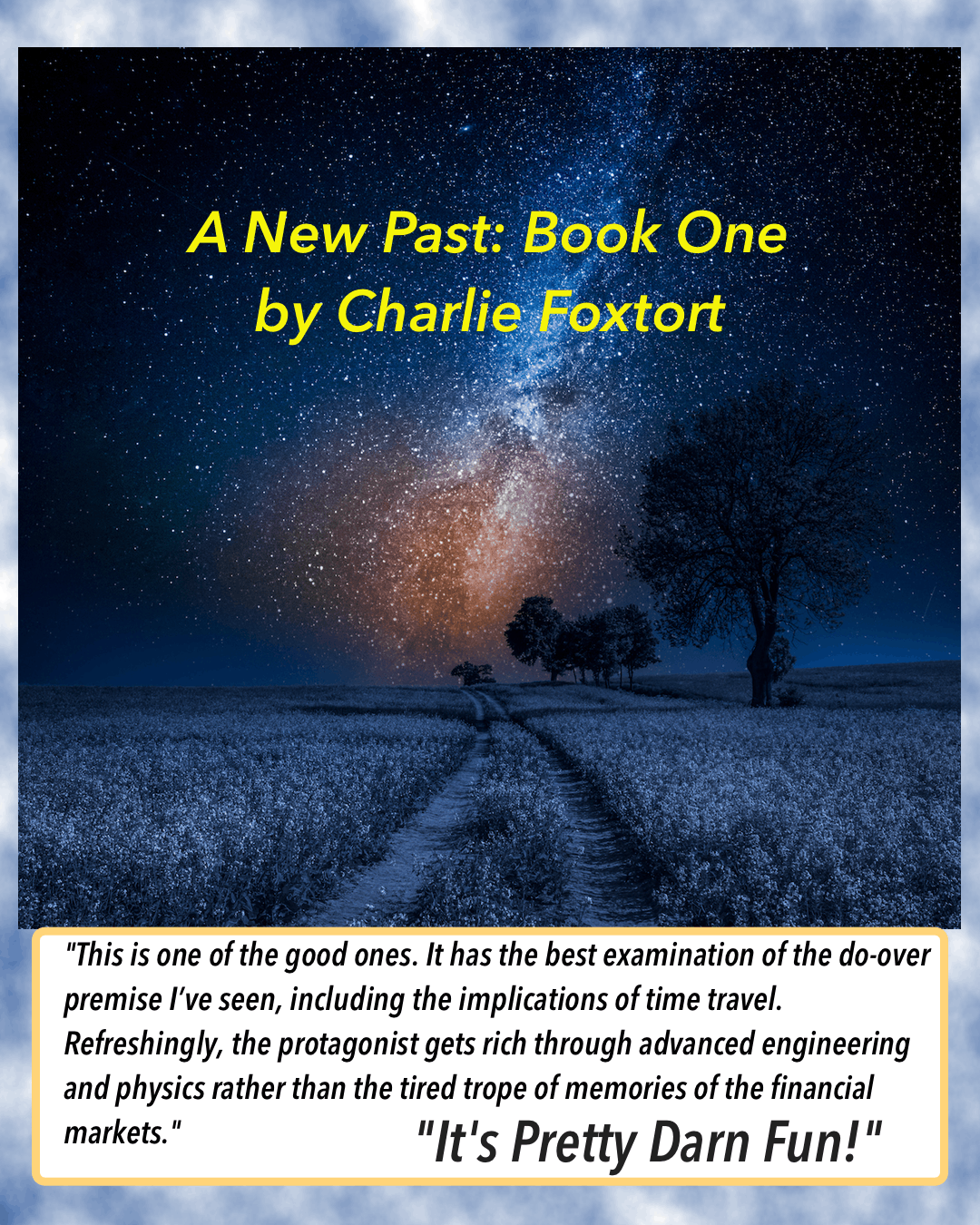
A New Past: Book One – Limited Time 33% Discount Special

To celebrate getting A New Past into many more channels for readers, I’m running a special on A New Past: Book One until August 27th. This 33% discount is available in US, Canada, UK, Australia, New Zealand, and the EU.

Direct URL: https://books2read.com/u/b5gyKO

Available on: Smashwords, Barnes & Noble, Rakuten kobo, Tolino, vivlio, Gardners, and fable.


What Readers Say:

I have a Thing for do-over stories—where the protagonist finds themself returned to an earlier point in their life. A chance to do things over, hopefully better this time. The appeal may be a reflection of my middle-age, but I still roll with it. My point being, I’ve read a lot of them.

This is one of the good ones. In particular, it has the best examination of the science-fictional aspects of a do-over premise I’ve seen, including its implications of time travel. Refreshingly, the protagonist gets rich through advanced engineering and physics rather than the tired trope of memories of the financial markets. I like that. I also like that it’s pretty darn fun.

All of the above makes this a plot-driven story, but one that drives towards a character-based dilemma in a really effective way. Best of all, it NAILS the ending so, so well—way better than most such stories.

Highly recommended.


Follow me on AmazonGoodReads, or Facebook to get information about upcoming book releases.
Expand Your Reach with Alternative Marketing Channels

One element of growing marketshare that was not included in my prior post is to add additional channels. Marketing Erotica is difficult with several mainstream platforms limiting what advertising you can perform on their platforms. Adding alternative channels and platforms should help you expand your reach. With that in mind, I decided to add all of my works currently available on Amazon to Smashwords and other platforms.

Smashwords specifically allows stronger marketing for erotic content than Amazon. To test out the marketing capabilities, I’m offering a 50% discount on Cosimo until the end of September. Check it out at:


Direct URL: https://www.smashwords.com/books/view/1597862

Available on: Smashwords

Coupon Code: JUU9T (for a 50% discount)


Direct URL: https://books2read.com/u/b5gyKO

Available on: Smashwords, Barnes & Noble, Rakuten kobo, Tolino, vivlio, Gardners, and fable.


Direct URL: https://books2read.com/u/38AaqV

Available on: Smashwords, Barnes & Noble, Rakuten kobo, Tolino, vivlio, Gardners, and fable.


Direct URL: https://books2read.com/u/bp9vk6

Available on: Smashwords, Barnes & Noble, Rakuten kobo, Tolino, vivlio, Gardners, and fable.


Follow me on AmazonGoodReads, or Facebook to get information about upcoming book releases.